The complete guide
How to get rid of goat heads, for good
In short: goat head, puncturevine and caltrop are the same plant, Tribulus terrestris. Its burs can survive in soil for up to about five years, so control takes more than one season. Do not mow: mowing scatters the burs. Pull plants before they seed, collect the fallen burs from the ground, bag them, and repeat each season.
If your yard, gravel drive or path is covered in hard little thorns that puncture bike tires, stick into pet paws and hurt bare feet, you are almost certainly dealing with goat heads. They are stubborn, but with the right seasonal routine you can get them under control. Here is how.
Know what you are fighting
Goat heads are a low, spreading summer weed of dry, disturbed ground: gravel, sand, hardpan, path edges. The painful part is the seed pod, a hard bur roughly 3 to 5 mm across with sharp spines. Each bur holds several seeds, and those seeds can stay viable in the soil for up to about five years. That long seed bank is the single most important thing to understand: it is why goat heads keep coming back and why control has to be repeated. Full identification guide:what are goat heads?
Why they are so hard to get rid of
Two things make goat heads persistent. First, the seed bank. Second, the way most people fight them: mowing. Running a mower over goat heads breaks off the dry burs and flings them across the yard, spreading the problem instead of solving it. Herbicides can help on young plants where local rules allow them, but once the burs are on the ground, the only thing that removes burs is collection.
The season-by-season plan
Goat heads follow a predictable yearly cycle, so the reliable approach works with the seasons. This is the same four-phase plan as ourGoat Head Control Calendar:
- Phase 1, scout early (typically spring): walk your property and find young plants before they flower. Young sprouts are easier to remove.
- Phase 2, remove young plants (late spring to summer): pull by hand with gloves, taking as much root as possible. Do not mow. This is the peak period for new burs.
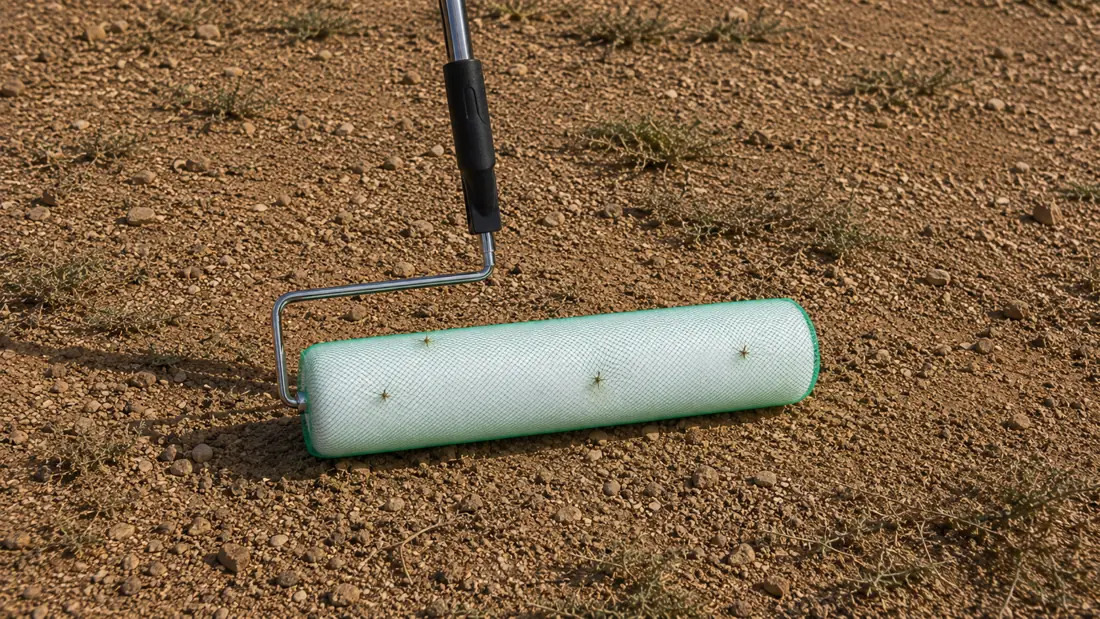
- Phase 3, collect dropped burs (late summer to fall): the burs on the ground are what cause flats and injuries. On gravel, sand and hardpan this is the hardest step by hand, and the step a dedicated collection tool exists for.
- Phase 4, prevent return (fall into winter): keep checking, keep collecting, and plan next season. Fewer burs on the ground means fewer viable seeds going back into the soil.
Removal, step by step
- Pull or dig young plants, ideally before they flower. Wear gloves.
- Never mow an infested area: it spreads the burs.
- Collect the dry burs from the ground surface.
- Bag everything you pull or collect and put it in the trash. Do not compost goat head material: the seeds can survive composting.
- Repeat every season. Consistency beats one heroic weekend.
Where THORNADO fits: THORNADO is a purpose-built roller system for the collection step. Roll it over gravel, sand and dirt: the burs lodge into the foam roller through a disposable green mesh sleeve. Peel the sleeve off inside out, burs trapped inside, and toss it. No bending, no kneeling, designed so the thorns stay in the mesh and not in your hands.See how it works.
Mistakes to avoid
- Mowing over goat heads: it spreads the burs.
- Waiting until fall to act, when the burs are already everywhere.
- Composting the burs instead of bagging and trashing them.
- Treating it as a one-off job rather than a seasonal routine.
- Only treating the lawn: check gravel, paths, driveways and fence lines.
Frequently asked questions
Are goat heads and puncturevine the same plant?
Yes. Goat head, puncturevine and caltrop are common names for the same plant, Tribulus terrestris. Other names include bullhead, cat-head and tackweed.
How long do goat head seeds survive in the soil?
The burs can stay viable for up to about five years, which is why control has to be repeated over several seasons.
Does mowing get rid of goat heads?
No. Mowing usually makes it worse, because it scatters the dry burs. Pull plants before they seed and collect fallen burs instead.
When is the best time to remove goat heads?
Scout in spring before flowering, remove plants during active growth without mowing, collect burs from late summer through fall, and keep checking into winter.
Will goat heads come back after I remove them?
They can, because of the long-lived seed bank. Repeating collection and removal each season steadily reduces the number of viable burs in your soil.